The MRI report came back with a phrase you've now read a dozen times: degenerative disc disease. Maybe it said "multilevel," maybe "mild to moderate." Nobody had time to explain it, so you did what everyone does and searched it that night, and spent the evening reading about a disease that sounds like it only goes one direction.
Maybe you read it at your desk, or in the car after a long day on 1604 or 281, and wondered whether the years of sitting, lifting and carrying kids did this. If that sounds familiar and you're in San Antonio, this is for you.
Here's the version we give people in our office: the phrase sounds worse than it usually is, and it isn't the whole story of why you hurt. This guide covers what it means, whether it gets worse, and what helps.
Degenerative sounds worse than it is.
Between each pair of vertebrae sits a disc, a cushion that absorbs load and lets your spine bend. Over the years, discs lose water, thin out and flatten a little. That's what "degenerative disc disease" describes. Despite the name, it isn't an infection or an illness moving through your back. It's wear, and it's very common.
A 2015 review of imaging studies in the American Journal of Neuroradiology put a number on it. Looking at people who had no symptoms, researchers found signs of disc degeneration in 37% of 20-year-olds. By age 80, it was 96%.
That doesn't mean degeneration never hurts. A thinner disc can leave less room around the nerves that exit beside it, and the joints behind it carry more of the load. Worn discs are also more likely to bulge or rupture under stress, which is why the two diagnoses often show up together. What it does mean is that the line on your report can't, by itself, tell you whether it's the reason you hurt.
Why one person's report hurts and another's doesn't.
Your MRI shows structure. It doesn't show pain. Two people can have the same finding at the same level, and one barely notices while the other can't sit through a meeting.
What separates them is what's being irritated. It might be a nerve getting crowded. It might be a segment that isn't moving the way it should, with the muscles around it guarding. It might be a disc that's also bulging. Each calls for a different plan, which is why we'd rather find the source than treat the label.
Does it get worse?
The discs themselves keep aging, because everyone's do. That part is just time. But pain doesn't follow the report in a straight line. For plenty of people it comes in flare-ups, a bad week after a long drive or a heavy lift, with quiet stretches in between.
Nobody can tell you what your disc will look like in ten years, and we won't pretend to. What we can tell you is what's irritated right now, and whether care can help with it. That's a more useful question than whether the picture will change.
What to watch for.
Pain that stays in your back or neck is one thing. Pain that travels is another. If it runs down a leg or arm, or comes with tingling, numbness or a weak grip or foot, a nerve is being compressed, and that's worth getting looked at sooner rather than later. Our sciatica article explains how that kind of pain works.
Some symptoms mean medical care first. Go to an emergency room for numbness in the groin or saddle area, loss of bladder or bowel control, new weakness in an arm or leg, or pain after major trauma. The same goes for a fever with a stiff neck. When in doubt, call 911.
What we do about it at Authority.
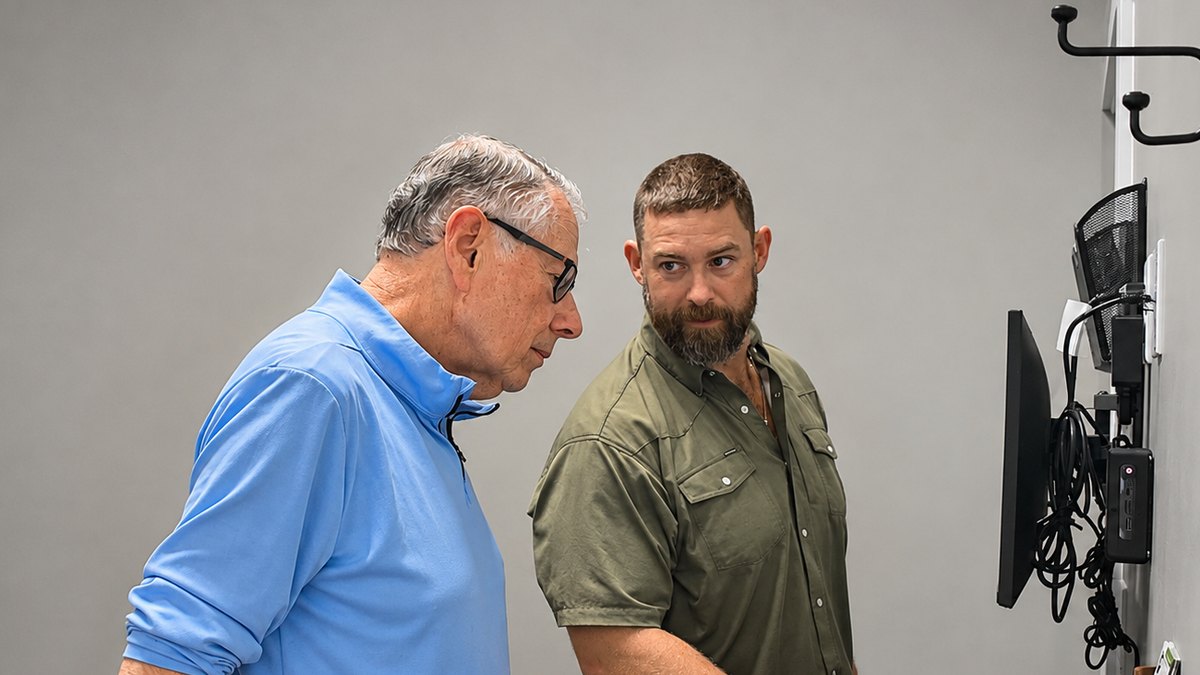
Bring your MRI report if you have one. We'll review it alongside our own findings, starting with the whole picture: how this began, what makes it worse, and what you've already tried. Next comes a nervous system scan, plus digital X-rays if they're called for, to see what's happening in your spine today. Only after that do we build a plan.
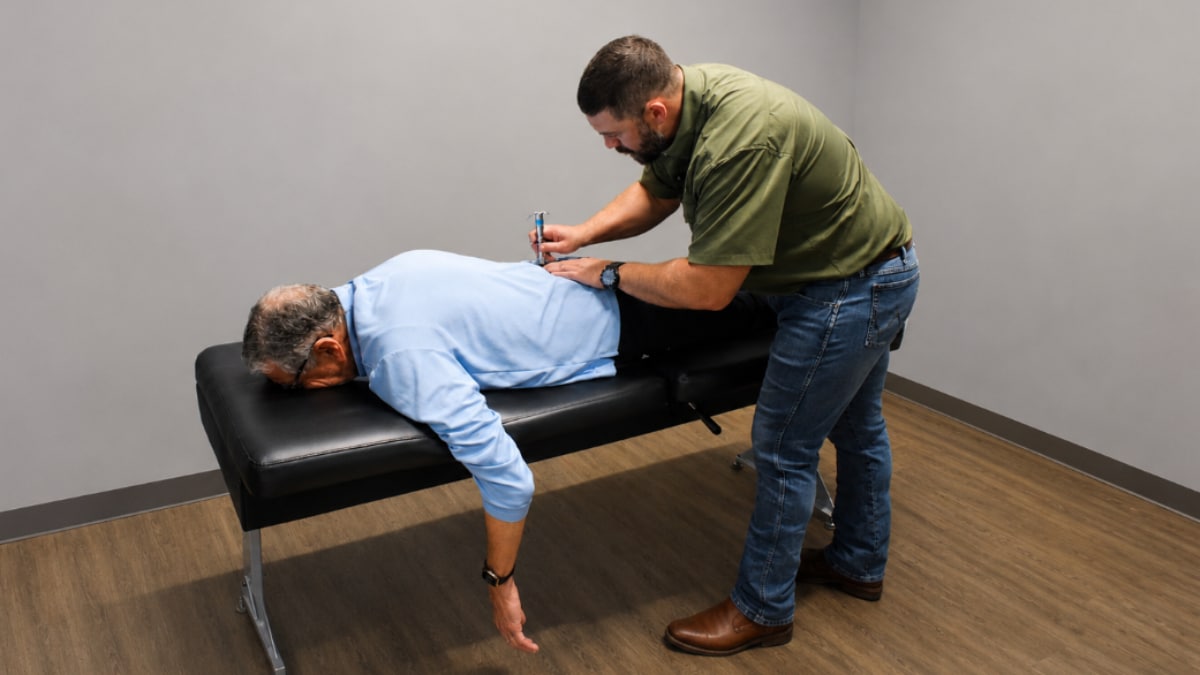
Our primary method is Torque Release Technique. The Integrator is a small handheld instrument. It delivers a quick, low-force impulse aimed at one specific spot, the one your exam points to. The typical sensation is a light tap or a bit of pressure. We also use manual adjustments when the exam calls for them.
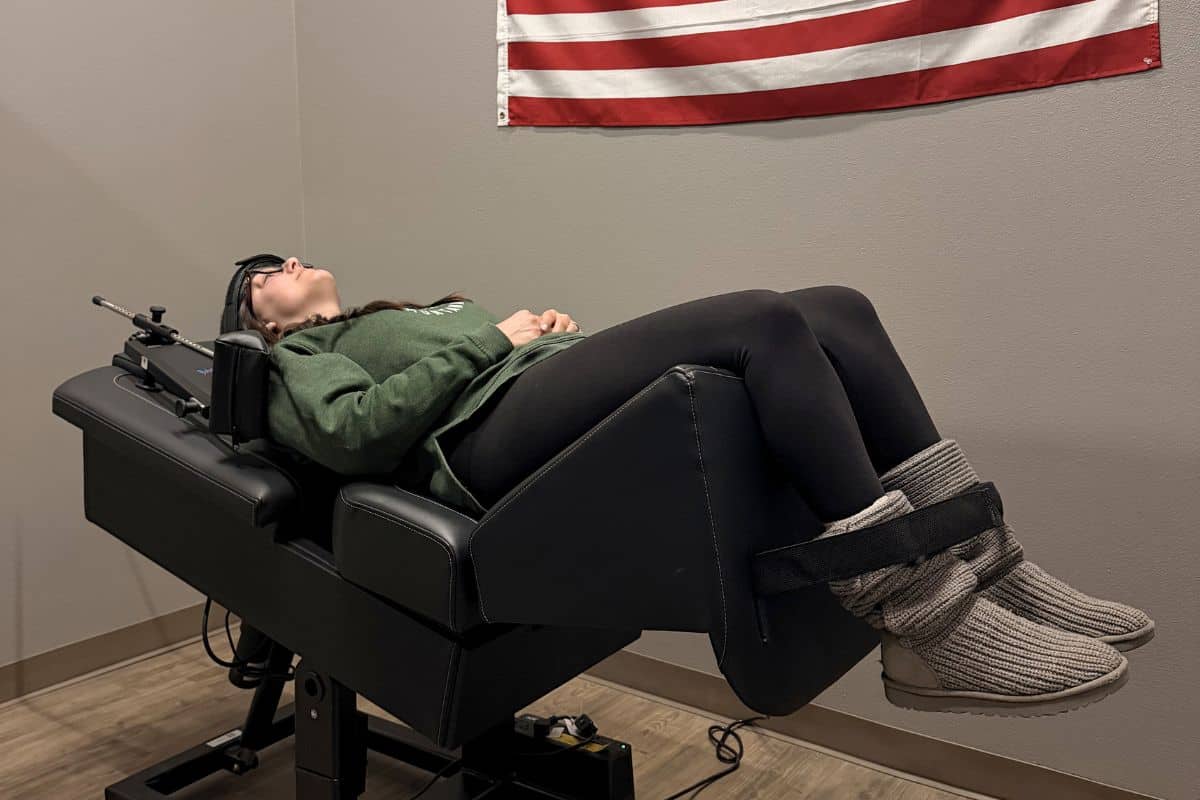
When your imaging shows disc compression behind the pain, we may bring in non-surgical spinal decompression. Back On Trac (lower back) and Cervi-Trac (neck) are FDA-cleared, computer-controlled systems, and both are in our office on N Loop 1604 W, so you're not sent across town for it. Sessions run 12 to 15 minutes, most people find them relaxing (some fall asleep), and you can go right back to work afterward.
It isn't right for every case. Before any treatment begins, we'll tell you whether we think it's the right fit. And if what we find points to something chiropractic doesn't address, we'll say so and refer you out.
The goal isn't to turn back the clock on your discs. It's to take pressure off what's irritated and get the area moving better, so you can get back to your life.
Common questions about degenerative disc disease.
Can degenerative disc disease be reversed?
The disc itself doesn't turn back into the one you had at 20, and we won't promise it. What care can address is the pressure, the movement and the irritation that make it hurt. After your exam, we'll tell you what we think is realistic.
Is it the same as a herniated disc?
No. Degenerative disc disease is wear that thins and dries out the disc. A herniated disc is when part of the disc pushes out and can press on a nerve. They often show up together, because worn discs are more likely to bulge under stress. Our article on herniated discs goes deeper.
Can a chiropractor help?
It depends on what's behind your pain, which is why we start with an exam. Disc degeneration is one of the conditions our spinal decompression is used for, alongside Torque Release Technique adjustments, and we'll tell you if you'd be better served elsewhere.
Will I need surgery?
That's a decision for you and a surgeon, and many people explore non-surgical care first. If your exam or imaging suggests you should get a surgical opinion, we'll say so.
Where can I get degenerative disc disease treatment in San Antonio?
We're on N Loop 1604 W in Ventura Plaza, in the same center as Silo and Costa Pacifica. You don't need a referral. Call or book online, and bring your MRI report if you have one.
Find out what's behind your pain, not just what's on the report.
If your MRI says degenerative disc disease and the pain hasn't settled, bring the report in. A full evaluation shows what's actually irritated and whether we can help. Our San Antonio office is in Ventura Plaza, at 434 N Loop 1604 W, Suite #2104.
Call (210) 343-5209 or book your evaluation online. Want to read more first? Here's how we approach herniated disc treatment.