
Try to find out what a chiropractor costs in San Antonio and you'll hit the same wall on every website: no prices. Just "call for pricing," a contact form, and a smiling stock photo. So you're left guessing whether you're about to spend forty dollars or four hundred, and whether your insurance covers any of it.
It's a fair question and it deserves a straight answer. Here's what actually drives the cost of chiropractic care, where insurance fits, and why the number on the first visit tells you almost nothing about what the care is worth.
Why nobody puts a price on the website.
This one frustrates people, and the cynical read is that clinics are hiding something. Sometimes that's true. But there's a legitimate reason too, and it's worth understanding before you start calling around.
A treatment plan built before anyone has examined you is a guess. Someone with six weeks of sciatica after a fall needs something different from someone whose neck pain traces back to fifteen years at a desk, who needs something different again from a patient whose imaging shows a herniated disc pressing on a nerve root. Those are three different plans, three different timelines, three different costs. A clinic that can quote you a firm number over the phone, before seeing you, is quoting you a protocol — the same package everyone gets — not a plan.
So the honest version of "we can't tell you yet" is really "we can't tell you yet." What a clinic absolutely can tell you is what the first visit costs, what it includes, and that you'll get the full cost of any recommended care before you commit to it. If they dodge that, that's a different problem.
Your first visit and your care plan are two different numbers.
This is where most of the confusion lives. People hear one price and assume it covers everything, or hear about a plan and assume the first visit is folded in.
The first visit is diagnostic. You're paying to find out what's actually going on: a full health history, a hands-on evaluation, a neurological scan of how your nervous system is functioning, and spinal X-rays when your history and exam show you genuinely need them. At the end you get a personalized care plan — a real one, based on findings, not a template.
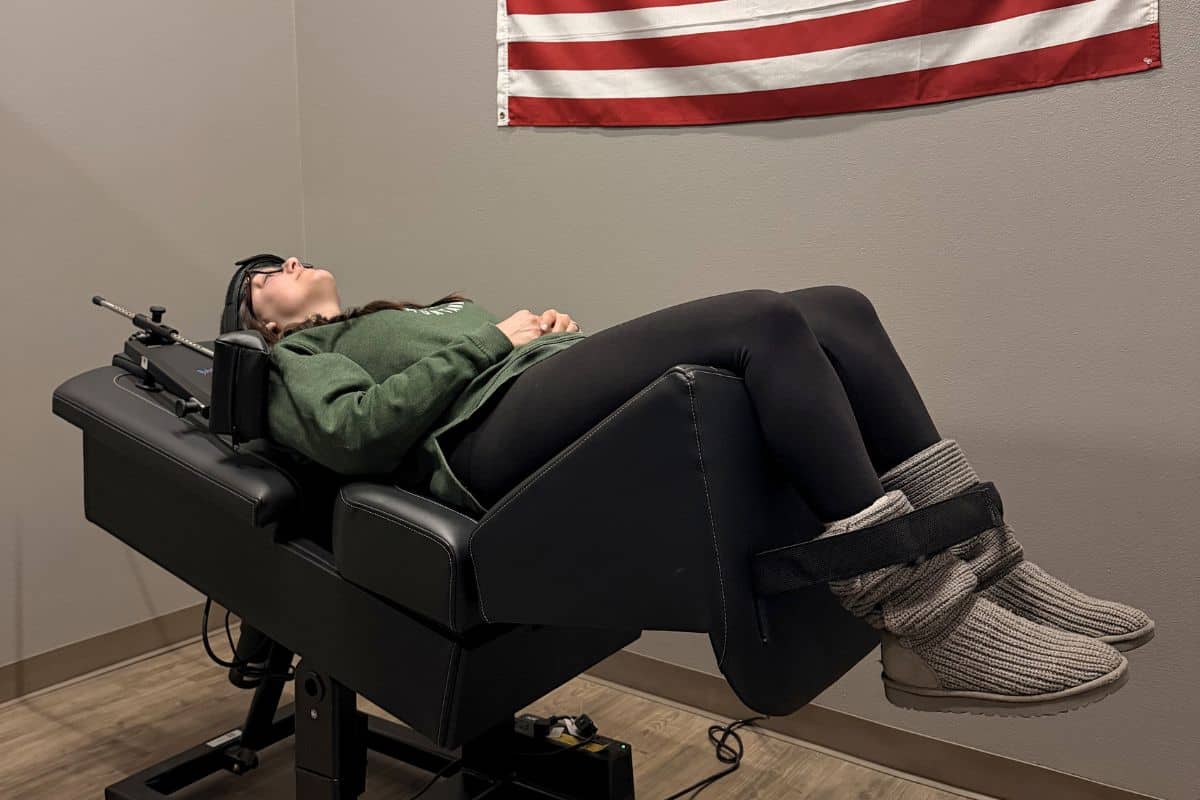
Ongoing care is separate, and it's quoted after the evaluation, because that's the first point at which anyone can quote it honestly. Some people need a short, focused stretch of care. Some need something longer. Some need spinal decompression alongside adjustments; most don't. Some walk out with a referral somewhere else entirely, because chiropractic isn't the right tool for what showed up on the film.
When you're comparing clinics, compare those two numbers separately. A cheap first visit attached to a rigid, expensive, one-size-fits-everyone plan is not a bargain.
Where insurance actually fits.
We accept most major providers, and our team verifies your benefits and walks you through your coverage at your visit, so there are no surprises.
That's the honest ceiling on what anyone can promise you in an article. Chiropractic coverage swings widely between plans — visit caps, deductibles, whether an X-ray is covered, whether you need a referral. Two people with the same insurer and different employers can have completely different chiropractic benefits. Any clinic that tells you over the phone exactly what you'll owe, before pulling your benefits, is making it up.
What you should expect is that someone actually checks, tells you the real number, and tells you before you're on the table — not after.
The question isn't "what does an adjustment cost." It's "what does it cost to fix the actual problem." Those are very different numbers, and only one of them is worth comparing between clinics.
Why the cheapest adjustment is usually the most expensive.
There's a whole category of clinic built around volume: a low price, a quick pop, and out the door in twelve minutes. It genuinely feels good. It's genuinely cheap. And for a lot of people it becomes a subscription — back every week, indefinitely, because the thing causing the problem was never addressed.
That's the math nobody puts on a price list. Forty dollars a visit forever costs more than a course of care that ends. We've written about why this happens: pain is a signal, and the place that hurts often isn't the place that's failing. Adjust the sore spot without looking at how the nervous system is functioning and you've bought relief, not a fix. Relief expires.
Care built on an actual evaluation costs more up front and less in total, because it's aimed at the thing generating the symptom instead of the symptom itself. Whether that's sciatica that keeps returning or a disc issue that a twelve-minute adjustment was never going to touch, the cheap version is only cheap until you count how many times you buy it.
What to ask about cost before you book.
Skip "how much is an adjustment." Ask these instead:
- What does the first visit cost, and exactly what's included?
- Will I get the full cost of my recommended plan in writing before I commit to anything?
- Do you verify my insurance benefits before I'm treated, or after?
- If I'm not a good candidate for your care, do I still pay for the evaluation?
- Is your plan pricing based on my exam findings, or is it a standard package?
A clinic that answers all five clearly is one you can trust with the bigger number later. And if you want the full picture on what separates good care from a busy waiting room, we've covered how to choose a chiropractor here.
Find out what's actually wrong before you worry about what it costs.
You can't price a solution to a problem nobody's identified yet. Come in, let us do a real evaluation, and you'll leave knowing what's going on, whether chiropractic care is the right answer, and exactly what it costs — no protocol, no pressure, no surprise invoice.