Yes. But most chiropractors only address half the problem.
A herniated disc happens when the soft, gel-like center of a spinal disc pushes through its outer layer and irritates nearby nerves. Some people barely notice it. Others end up with sharp radiating pain, numbness, tingling, or weakness — sometimes severe enough to land them in a surgical consult. When the lower back is involved, sciatica usually comes with it.
The right approach catches it early, addresses both the mechanical compression and the nervous system response, and avoids surgery in the majority of cases. At Authority Chiropractic, we combine neurologically-based adjustments with non-surgical spinal decompression in San Antonio — and that combination is why our outcomes look different than most.
What causes a herniated disc.
Most herniated discs develop slowly, as discs lose hydration and flexibility over years. Sometimes a specific moment triggers it — lifting, twisting, an accident — but plenty of patients can't point to a single event. The disc was already vulnerable. Something just tipped it over.
Common contributors include:
- Excess weight
- Physically demanding work
- Long hours sitting or driving
- Sedentary lifestyle
- Smoking
- Family history
What it feels like. And what to watch for.
Disc symptoms vary based on which disc is involved and how severely:
- Localized back or neck pain
- Pain that radiates into the arms or legs
- Numbness, tingling, or burning
- Sciatica from lumbar disc herniations
- Weakness in the affected limb
If you experience sudden loss of bowel or bladder control, severe progressive weakness, or numbness in the saddle region, go to the ER. These can be signs of cauda equina syndrome — a rare but serious complication that requires emergency care.
How chiropractors actually treat disc injuries.
Conservative care is the first line for most disc injuries — and the research backs that up. The question is what kind of conservative care.
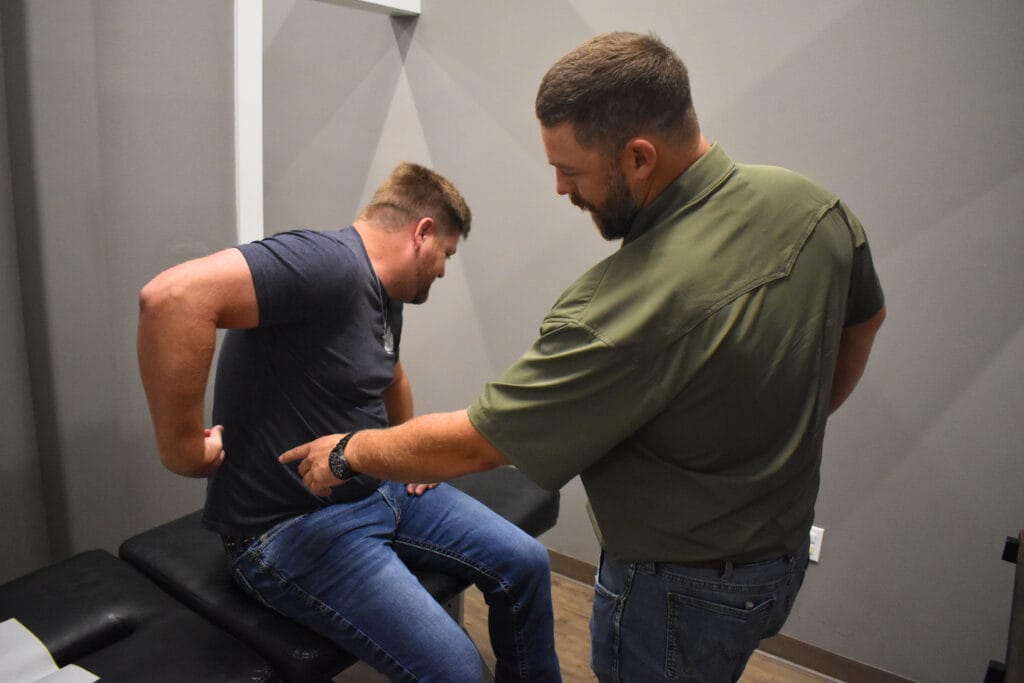
Most chiropractic practices focus on restoring joint mobility and improving spinal alignment. That's useful — it reduces mechanical stress on the injured disc. But it's not the whole picture.
Here's what we do differently:
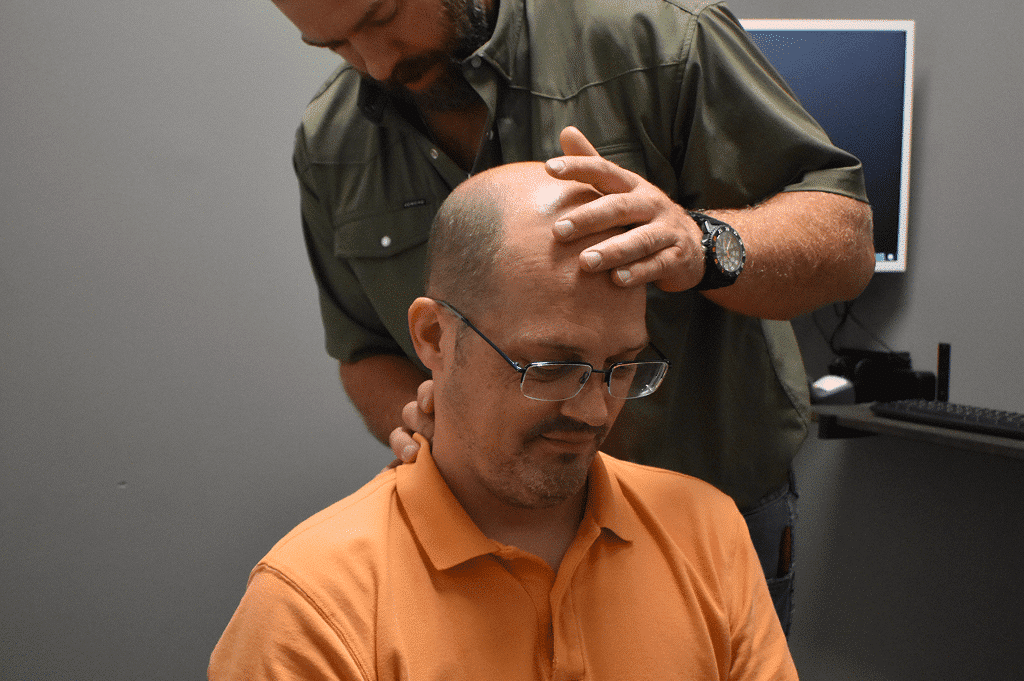
Neurologically-based chiropractic adjustments. We use Torque Release Technique — gentle, instrument-based adjustments that restore healthy communication between the brain and body. When the nervous system functions properly, healing accelerates, inflammation reduces, and the muscles around the spine stabilize naturally.
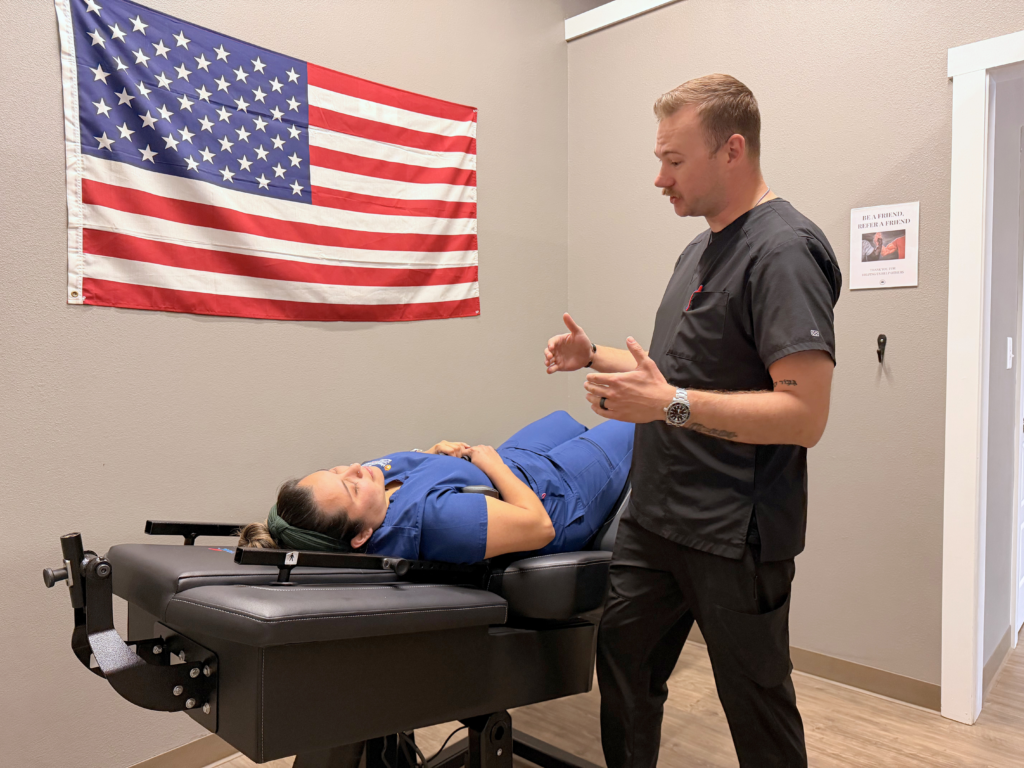
Non-surgical spinal decompression. This is the piece most chiropractors don't offer. Spinal decompression is a controlled, FDA-cleared therapy that gently creates negative pressure inside the disc — drawing material back toward its proper position, improving disc hydration, and relieving nerve compression.
Why we combine both.
Adjustments and decompression address two different parts of the problem. Adjustments improve how the nervous system runs the show — muscle balance, posture, healing capacity, communication. Decompression directly targets the mechanical issue — the pressure inside the disc itself.
Run together, they create a synergy that neither one fully achieves alone. Patients tend to experience faster pain relief, less nerve irritation, and longer-lasting outcomes than they would with either treatment in isolation.
For someone with a true disc injury — not just back pain, but actual bulging or herniated disc material on imaging — that combination is often the difference between recovery and surgery.
What the research says.
Studies on conservative care for disc injuries consistently show meaningful results: reduced disc herniation size, less nerve irritation, lower pain levels, better mobility. MRI studies have demonstrated disc reabsorption in over half of patients receiving consistent conservative care — meaning the disc material that was pressing on the nerve actually shrunk back, without surgical intervention.
This is the part most patients aren't told upfront. Surgery is often presented as the inevitable next step, when in fact, a strong percentage of disc patients who commit to conservative care never need it.
How long recovery takes.
Disc injuries are individual. Some patients notice improvement in just a few visits. Others take weeks of consistent care to stabilize the disc and calm down the irritated nerves. The timeline depends on:
- How severe the herniation is
- How long the symptoms have been present
- Whether nerve compression is involved
- Daily posture and movement habits
- How closely the recommended care plan is followed
A thorough evaluation tells us what we're working with, and what combination of adjustments and decompression makes sense for your specific case.
If you're dealing with disc pain.
If you've been told surgery is the next step — or if you're tired of cycling through medications, injections, and physical therapy that hasn't held — let's talk before you commit to anything irreversible. We'll do a full evaluation, look at any imaging you have, and give you an honest assessment of whether our approach is the right fit for your situation.
Call (210) 343-5209 or book an appointment online. We'll start with a real conversation — not a sales pitch.