If you've started researching spinal decompression in San Antonio, you've probably noticed the prices and the promises are all over the map — the same therapy, quoted at wildly different numbers. One clinic sits you in a relaxing recliner, another straps you to a table. They all call it the same thing.
Here's what most of them don't tell you: "spinal decompression" is a category, not a single treatment. The equipment ranges from decades-old traction tables to newer automated systems. And the people running it range from a technician pressing start on a preset to a doctor who has actually read your imaging. Those two gaps — the machine and the method — are the difference between a treatment that works and one that just stretches your back for twenty minutes.
So "is it worth it?" is exactly the right question. It's just the wrong question to ask in the abstract. The honest answer depends on what you're treated on, who's directing it, and whether you're even the right candidate. Here's how to tell.
The machine matters more than most people realize.
Traditional spinal decompression is done on a motorized traction table. You lie flat, you're harnessed in at the chest and hips, and a computer pulls the two halves apart to take pressure off the spine. It works in principle — but it's cumbersome. The belts and restraints take time to set up, the sessions can run thirty minutes or more, and most of these tables only treat one region: the lower back.
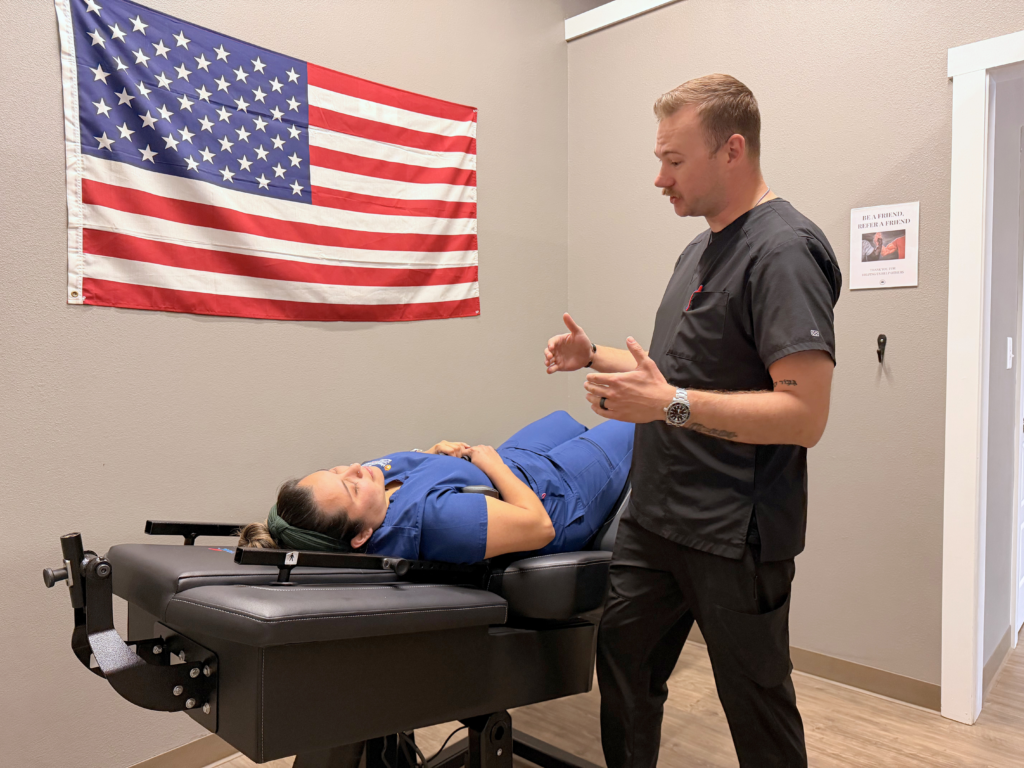
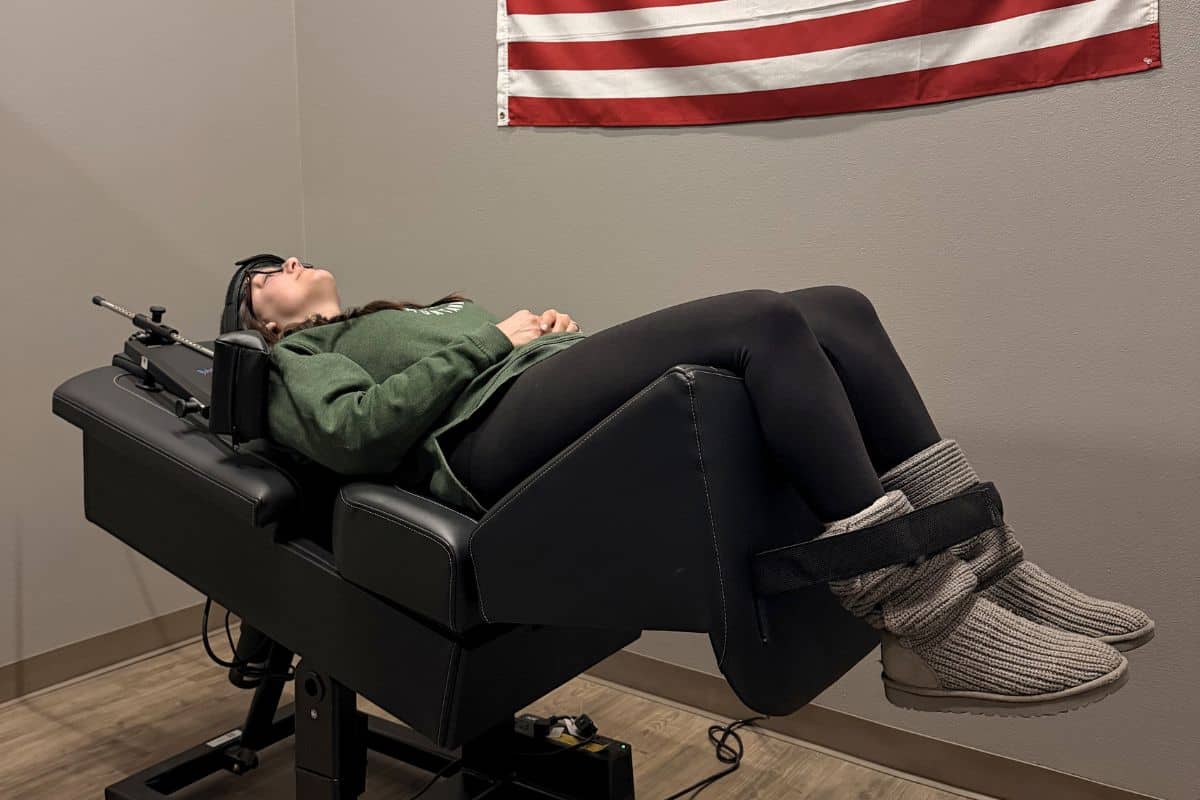
The system we use was built to fix those problems. Back On Trac isn't a flat table — you sit and recline into it, with no belts or straps, while it delivers gentle, computer-controlled traction. It adds heat and light vibration to relax the muscles around the spine while it works. And because there's no harness to rig up and the system runs more efficiently, a typical session takes about 12 to 15 minutes — less than half the time you'd spend on a traditional table. Most patients describe it as comfortable rather than clinical, and a fair number fall asleep partway through.
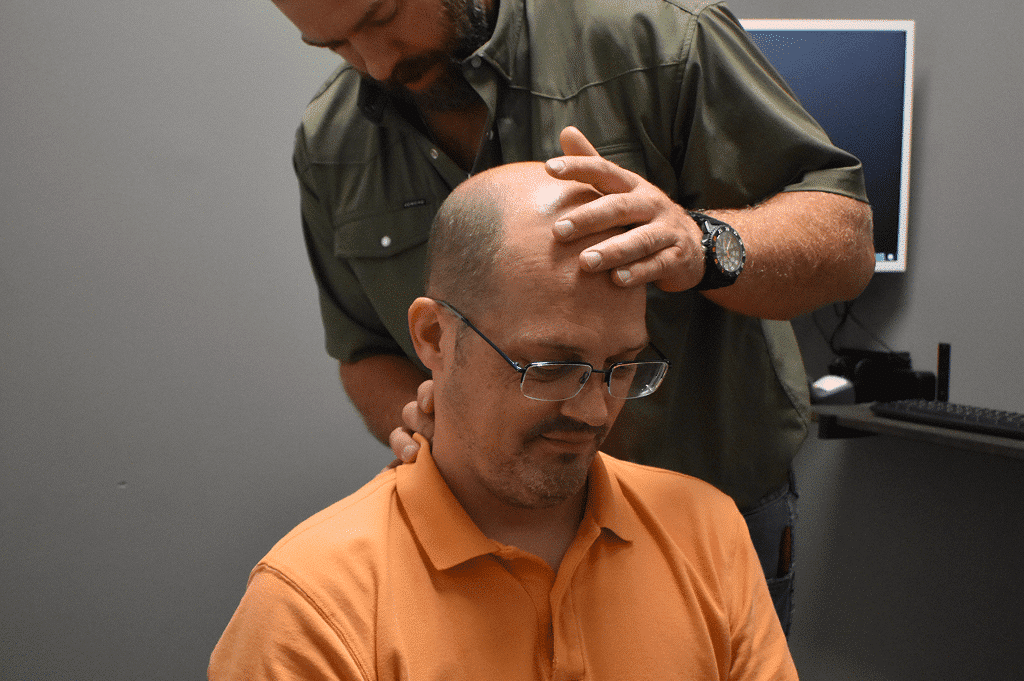
The other piece older tables miss: the neck. Because the same system pairs with the Cervi-Trac attachment, it decompresses the cervical spine too — so neck, upper-back, and arm pain are on the table, not just the lower back. Both devices are FDA-cleared and computer-controlled, and both are calibrated to your specific anatomy. Most decompression setups in San Antonio can only treat one area; our San Antonio spinal decompression program handles both under one roof.
Less setup, a gentler experience, more efficient sessions, and coverage for the neck as well as the back. That's the equipment side of the equation — and on its own, it already separates the newer technology from the table in the corner of a strip-mall clinic.
But the equipment is only half of it.
A decompression machine in a room is not a treatment plan. The bigger differentiator — the one that actually determines whether you get better — is whether a doctor is diagnosing and directing your care, or whether you're just renting time on a table.
Plenty of clinics run decompression like a conveyor belt. Same protocol for everyone, a technician hits start, you come back twenty times. When the machine does all the thinking, the results are exactly as generic as the setup.
We do it the other way around. Care starts with an exam and imaging to confirm the problem actually is disc-and-nerve pressure — and not something decompression won't fix. From there it's calibrated to your anatomy and paired with neurologically-based chiropractic, so you're addressing the disc, the spine, and the nervous system driving the pain together — not just pulling on the spine and hoping. That pairing is the part most decompression mills skip, and it's the reason the same machine can produce very different outcomes in different hands.
What a session actually feels like.
The mental image a lot of people have — being cranked on a medieval-looking rack — keeps them from ever booking. The reality is close to the opposite.
The traction is gradual and computer-controlled, adjusted to a level your body is comfortable with rather than forced. Most patients describe it as a gentle pull, or even a relieving sensation, since it's actively taking pressure off the nerve that's been causing the trouble. The whole thing takes about 12 to 15 minutes, there's no recovery time, and you can go straight back to work or your day afterward. If anything feels off mid-session, it's adjusted on the spot — the system is built to be patient-led, not aggressive.
So is spinal decompression worth it?
When it's the right fit and it's delivered well, decompression is one of the most effective non-surgical options for disc-related pain — and it sits at a fraction of the cost and disruption of surgery, which often runs into the tens of thousands of dollars with weeks of recovery on the other side. If you're specifically weighing it against an operation, we go deeper on that comparison in this breakdown of decompression versus surgery.
None of that means it's a shortcut. A disc doesn't decompress in a visit or two — real correction takes a course of care, usually a few months and 20 or more sessions, because that's what it takes to relieve the pressure and give the disc the room to recover. Any clinic promising to fix a disc in a handful of visits is overselling it.
What sets us apart isn't a faster program — it's the total. A full course of decompression gets expensive at a lot of clinics, and ours comes in well under what most people expect. Patients are routinely surprised at how affordable a complete plan with us turns out to be, especially next to the surgery they'd been bracing for.
On the practical side, there are no surprises. We work with HSA and FSA accounts, accept most major credit cards, and offer payment plans for patients who need them — and the full cost of your care is explained at the evaluation, before you commit to anything.
And here's the part that should actually build your confidence: if decompression won't help your case, the right clinic tells you that before you pay. That's how our evaluation is built. "Worth it" is never a foregone conclusion — it's a question we answer honestly for your specific spine.
Spinal decompression isn't right for every back problem. Certain fractures, severe structural instability, advanced osteoporosis, or some post-surgical situations can make it the wrong choice — which is exactly why a real evaluation and imaging come first, not a sales pitch.
Who spinal decompression actually helps.
Decompression is built for the conditions where pressure on the spine and nerves is the underlying cause — the ones where massage, medication, and even standard adjustments tend to come up short. You're likely a candidate if one or more of these sounds like you:
- You have a herniated, bulging, or degenerated disc
- You have sciatica or pain radiating down a leg
- You have chronic lower-back or neck pain that's lasted months or years
- You have numbness or tingling in your arms or legs
- Physical therapy or injections haven't resolved the pain
- You've been told surgery may be your next step
If none of that fits — if your pain is purely muscular, or driven by something structural that decompression can't reach — we'll say so. Sending the wrong patient through the wrong treatment helps no one, and it's the fastest way to make someone decide decompression "doesn't work" when the real issue was that it was never the right tool for their problem.
Finding the right spinal decompression in San Antonio.
If you take nothing else from this, take the short checklist. Before you commit to a course of decompression anywhere, ask whether the clinic can treat your region — your neck, not just your lower back — whether a doctor is reviewing real imaging instead of handing you a generic protocol, whether the decompression is paired with care that addresses why the problem started, and whether they'll be honest with you if you're not a candidate.
That's the standard we hold ourselves to, because it's the only version of decompression we think is actually worth a patient's money. If you want to find out where your spine stands, the first step is a straight evaluation — we'll review your imaging, tell you honestly whether decompression has a real chance of resolving your condition, and walk you through the plan and the cost with no pressure.
Call (210) 343-5209 or book your evaluation online. We'll take it from there.